Watt'n Potatoes logoWatt'n Potatoes
TurntablesTonearmsCartridgesPhono Preamps

Education Repository

HiFi 101

Every explainer article we've written — grouped by topic so you can find what you need. As the site grows, new categories will appear here.

31 articlesTurntable 101 — full curriculum →

Start Here

The foundations — what a turntable actually is and how the whole system works.

What Is a Turntable? How It Works — A Complete Guide

What Is a Turntable? How It Works — A Complete Guide

Everything a vinyl record does — storing sound, spinning at exactly the right speed, turning groove geometry into a voltage — is mechanical physics. Here is how a turntable actually works, from the platter to the stylus tip.

What Is a Phono Stage? (And Why You Can't Skip It)

What Is a Phono Stage? (And Why You Can't Skip It)

Your turntable's cartridge outputs a tiny signal at the wrong frequency balance. A phono stage fixes both problems — here is exactly what it does and why your system cannot work without one.

Belt Drive vs Direct Drive vs Idler: The Complete Turntable Drive System Guide

Belt Drive vs Direct Drive vs Idler: The Complete Turntable Drive System Guide

Belt, direct, idler — the drive system debate has shaped hi-fi for 70 years. Here is what it actually means for how your record sounds.

Setup Guides

Step-by-step walkthroughs for every stage of getting your turntable dialled in.

How to Set Up Your Turntable: A Step-by-Step Guide

How to Set Up Your Turntable: A Step-by-Step Guide

A complete step-by-step guide to turntable setup: levelling, tonearm balance, tracking force, anti-skate, VTA, cartridge alignment, phono connections, and speed verification — everything needed to go from out-of-the-box to dialed in.

How to Balance a Tonearm: Step-by-Step

How to Balance a Tonearm: Step-by-Step

Balancing a tonearm takes under five minutes and is the single most important setup step most new turntable owners skip. Here is exactly how to do it, and why it matters more than you think.

How to Install and Align a Phono Cartridge

How to Install and Align a Phono Cartridge

Installing a phono cartridge looks intimidating — tiny screws, fragile stylus, four color-coded wires — but the process is methodical and repeatable. Here is every step, in order, with nothing left out.

How to Use a Cartridge Alignment Protractor

How to Use a Cartridge Alignment Protractor

A cartridge alignment protractor tells you exactly where your stylus tip needs to sit and which direction it needs to point. Understanding the geometry takes two minutes. Using one correctly takes five.

How to Level a Turntable

How to Level a Turntable

Leveling a turntable is one of the simplest setup tasks and one of the easiest to get wrong. This hifi-101 guide covers the tools, the sequence, and the platter-versus-plinth distinction.

Tonearm Geometry

The precision mechanics of how your tonearm and cartridge interact with the groove.
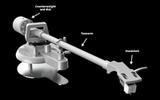
What Is Cartridge Alignment? Baerwald, Stevenson & Löfgren Explained
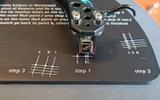
What Is Cartridge Alignment? Baerwald, Stevenson & Löfgren Explained

Cartridge alignment sets the precise position and angle of the stylus in the headshell so it traces the groove at minimum distortion. Three geometric standards — Baerwald, Stevenson, and Löfgren — each place the null points differently, with real trade-offs depending on how you listen.

What Is Overhang? Tonearm Geometry Explained

What Is Overhang? Tonearm Geometry Explained

Overhang is the distance the stylus tip extends beyond the tonearm pivot point. Set it correctly and your cartridge tracks at minimum distortion across the record — get it wrong and distortion climbs from the first groove to the last.

What Is Anti-Skate? How It Works and How to Set It

What Is Anti-Skate? How It Works and How to Set It

A pivoted tonearm naturally wants to slide toward the centre of the record. Anti-skate applies a counterforce to keep the stylus tracking both groove walls equally — and getting it wrong costs you channel balance and stylus life.

What Is Azimuth? How Cartridge Alignment Shapes Your Sound

What Is Azimuth? How Cartridge Alignment Shapes Your Sound

The stylus sits in a stereo groove cut at two 45-degree angles. Azimuth is the rotational alignment that keeps it reading both walls equally — and when it's off, stereo imaging is the first thing to go.

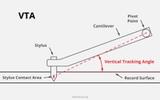
What Is VTA / SRA? Vertical Tracking Angle Explained

What Is VTA / SRA? Vertical Tracking Angle Explained

VTA is the angle the tonearm sits relative to the record surface. SRA is the angle the stylus actually contacts the groove wall. They move together — but only one of them determines what you hear.

What Is Tracking Force? VTF Explained

What Is Tracking Force? VTF Explained

Tracking force is the downward pressure your stylus exerts on the groove, measured in grams. Get it right and the stylus traces faithfully; get it wrong and every record pays the price.

What Is Tonearm Effective Mass? Matching Arm and Cartridge

What Is Tonearm Effective Mass? Matching Arm and Cartridge

Tonearm effective mass is the total inertia the cartridge suspension has to work against. Match it correctly to cartridge compliance and you get a stable, resonance-free platform. Get it wrong and low-frequency resonances undermine everything else you've set up correctly.

What Is Tonearm Resonance Frequency? The Arm–Cartridge Sweet Spot

What Is Tonearm Resonance Frequency? The Arm–Cartridge Sweet Spot

The tonearm-cartridge resonance frequency is the point where the combined system naturally oscillates. Hit the 8–12 Hz sweet spot and low-frequency noise stays inaudible. Stray outside it — too high or too low — and rumble, warp, or mistracking becomes a real problem.

What Is Cartridge Compliance? Why It Matters for Tonearm Matching

What Is Cartridge Compliance? Why It Matters for Tonearm Matching

Compliance is the measure of how easily a cartridge's suspension deflects. Match it to your tonearm's effective mass and the system resonates in a safe frequency range. Mismatch it and the tonearm-cartridge system creates audible low-frequency problems that no amount of other setup work can fix.

Cartridges & Styli

Everything about the tiny transducer that reads the groove — types, shapes, and how they differ.

Moving Magnet vs Moving Coil: Which Cartridge Type Is Right for You?

Moving Magnet vs Moving Coil: Which Cartridge Type Is Right for You?

MM cartridges are forgiving, affordable and easy to upgrade. MC cartridges go deeper into the groove. Here's how to choose between them.

What Is a Moving Magnet Cartridge?

What Is a Moving Magnet Cartridge?

Moving magnet cartridges are the most widely used pickup type in the world — forgiving, versatile, and far more capable than most people expect.

What Is a Moving Coil Cartridge?

What Is a Moving Coil Cartridge?

Moving coil cartridges flip the design of a moving magnet — lower moving mass, lower output, and a ceiling that MM simply can't reach.

What Is a Moving Iron Cartridge?

What Is a Moving Iron Cartridge?

Moving iron cartridges are the quietly brilliant third option — ultra-low moving mass, MM-compatible output, and a musicality that Soundsmith and Grado have turned into a serious following.

What Is Stylus Shape? Spherical, Elliptical, Line Contact and Shibata Explained

What Is Stylus Shape? Spherical, Elliptical, Line Contact and Shibata Explained

The diamond tip on your cartridge isn't just a point — its shape determines how much information it reads, how cleanly it handles inner grooves, and how quickly it wears your records.

What Is Cartridge Loading? Impedance and Capacitance Explained

What Is Cartridge Loading? Impedance and Capacitance Explained

Cartridge loading — the impedance and capacitance your phono stage presents to the cartridge — is one of the most audible and most misunderstood settings in vinyl playback. Get it wrong and the frequency balance shifts; get it right and the cartridge performs as designed.

Phono Stage & Signal Chain

The electronics between your cartridge and your amplifier — and why they matter more than most people think.

What Is RIAA Equalization? The Hidden Step in Every Record

What Is RIAA Equalization? The Hidden Step in Every Record

Every record is pressed with bass intentionally cut and treble intentionally boosted. Your phono stage reverses that curve — a correction called RIAA equalization — and without it, vinyl sounds like a bad telephone call.

What Is Phono Gain? MM vs MC Explained

What Is Phono Gain? MM vs MC Explained

A phono cartridge outputs a signal so small — often less than 0.5 millivolts for a moving coil — that your amplifier cannot use it directly. Phono gain is the amplification step that bridges that gap, and matching it correctly to your cartridge is one of the most important decisions in a vinyl system.

Built-In vs External Phono Stage: Does It Actually Matter?

Built-In vs External Phono Stage: Does It Actually Matter?

Your turntable's built-in phono stage gets the job done — but it's often the first component holding back an otherwise capable system. Here's when upgrading to a dedicated external stage makes a real difference.

Speed, Noise & Isolation

The mechanical gremlins that degrade playback — and how to measure and minimise them.

Turntable Isolation Explained

Turntable Isolation Explained

A plain-language guide to why turntables need isolation, what decoupling means, and which product categories address airborne versus structure-borne vibration.

What Is Wow and Flutter? Speed Errors and Why They Matter

What Is Wow and Flutter? Speed Errors and Why They Matter

Wow and flutter measure how steadily your turntable spins. Even tiny speed fluctuations translate directly into pitch instability — the slow drift of a piano note, the slight seasick quality on a sustained vocal. Here is what the spec means and why it matters.

What Is Turntable Rumble? How It Affects Your Sound

What Is Turntable Rumble? How It Affects Your Sound

Rumble is low-frequency mechanical noise generated by a turntable's bearing and motor, picked up by the stylus and amplified alongside your music. You may not hear it directly — but your woofers feel it, and your soundstage pays the price.

What Is Inner Groove Distortion? Why Records Sound Worse Near the Label

What Is Inner Groove Distortion? Why Records Sound Worse Near the Label

Inner groove distortion is the sibilance, grit, and harshness that creeps in on the last few tracks of a vinyl side. It's caused by geometry, not pressing quality — and understanding why it happens is the first step to reducing it.

More Articles

Cartridge Alignment Geometry Explained: Baerwald, Löfgren & Stevenson

Cartridge Alignment Geometry Explained: Baerwald, Löfgren & Stevenson

Baerwald, Löfgren B, and Stevenson are not preferences — they are mathematical solutions to the same physical limitation. Here is what each one actually optimizes, where the null points fall, and how to choose between them.