

TL;DR
The One-Line Answer
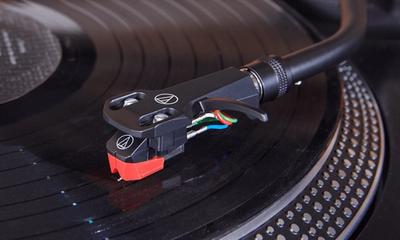
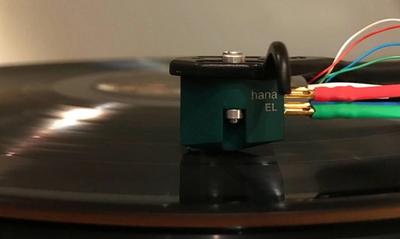
A moving magnet (MM) cartridge is a phono pickup where a small magnet attached to the stylus cantilever vibrates between fixed coils, generating the tiny electrical signal that becomes your music. It's the most common cartridge design on the planet, and for good reason — it's practical, affordable, and easier to live with than anything else.
This guide is part of our Cartridge Hub — a complete resource covering cartridge types, stylus shapes, alignment, and setup.
How It Works
The mechanics are simple. A tiny magnet is mounted at the back end of the cantilever — the thin rod that holds the stylus tip. As the stylus tracks the record groove, the cantilever pivots, and the magnet moves within a set of fixed coils housed inside the cartridge body. That motion induces a voltage in the coils, typically around 5mV, which is strong enough to drive any standard MM phono stage without heroic amplification.
The big practical advantage falls out of this layout: because the stylus and cantilever assembly sit separately from the coils, the stylus is user-replaceable. When the diamond wears out after a few thousand hours, you pop off the old stylus, click on a new one, and the cartridge is effectively reborn. No re-aligning, no shipping the whole unit back to the manufacturer.
The Numbers That Matter
Three specs define an MM cartridge's electrical behavior, and all three need to line up with your phono stage.
Output voltage sits between 2.5mV and 5mV for nearly every MM cartridge on the market. That's roughly ten times what a typical moving coil puts out, which is why MM carts plug straight into the MM input of any phono stage with no step-up transformer or extra gain stage.
Input impedance is standardized at 47kΩ. Essentially every MM phono input in the world is built to this value, so you don't have to think about it — just plug in.
Capacitance loading is where things get interesting. MM cartridges are sensitive to the total capacitance they see — meaning the cartridge plus tonearm wiring plus interconnect cable plus phono stage input. Most manufacturers specify a target window somewhere between 100pF and 200pF. Miss that window by too much and the top end can either roll off or develop a peak. It's the one spec worth double-checking before you buy.
What MM Does Well
MM plays to its strengths in four places. First, the high output voltage makes phono stage matching trivial — if your integrated amp or receiver has a phono input, it almost certainly has an MM phono input. Second, the replaceable stylus keeps long-term ownership cheap; a new stylus costs a fraction of a new cartridge. Third, the price range is enormous. You can spend $30 on an entry-level MM and still get music, or $1,500 on something like the top-end Ortofon 2M Black and still be in MM territory. Fourth — and this one matters more than spec sheets suggest — MM cartridges are forgiving of imperfect setup. Tracking force a bit off, alignment not quite perfect, anti-skate guessed rather than dialed? MM will shrug and keep playing music.
The classic entry and mid-tier picks tell the story: the Ortofon 2M Red, the Audio-Technica VM95E, the Nagaoka MP-110, and a step up to the Ortofon 2M Blue — all MM, all widely recommended, all easy to live with.
Where MM Has Limits
The honest trade-off is moving mass. Because the magnet has to travel with the cantilever, the tip end of an MM cartridge is physically heavier than the equivalent part of a moving coil. Higher moving mass means the stylus is slightly less eager to follow the most extreme, high-frequency groove wiggles. At the top of the high-end MC range, you'll hear a touch more air, a touch more inner detail, a bit more of that last-10% resolution.
Context matters though. Most $500 MM cartridges outperform most $500 MC cartridges in the real world, on real systems, played by real people who don't obsessively re-align every week. The theoretical ceiling of MC is higher, but the practical sweet spot of MM reaches further than the forum consensus often admits.
MM vs MC: The Honest Answer
At equal price, MM usually wins on value until you cross roughly the $500 mark. Below that, the MM advantages — replaceable stylus, easier phono stage matching, more forgiving setup — dominate. Above that, MC starts to justify its complications, assuming you have the phono stage and patience to support it. MC has its own dedicated article, because the nuances there deserve their own space.
Put this into practice
Ready to apply what you just learned? These guides will help you make a smarter buying decision.