What Is VTA / SRA? Vertical Tracking Angle Explained
VTA is the angle the tonearm sits relative to the record surface. SRA is the angle the stylus actually contacts the groove wall. They move together — but only one of them determines what you hear.
Few turntable setup parameters generate more debate — or more confusion — than the pair of acronyms that govern how a stylus meets a record groove. VTA (Vertical Tracking Angle) and SRA (Stylus Rake Angle) describe related but distinct geometries, and reviewers routinely point out that the two terms get used interchangeably even though only one of them actually controls the sound coming out of the cartridge. Understanding which is which, and what each one does, is the difference between chasing a setup ghost and making a meaningful adjustment to a tonearm.
This guide is part of our Cartridge Hub — a complete resource covering cartridge types, stylus shapes, alignment, and setup.
The geometry was first formalized in the 1940s by H.G. Baerwald in his Journal of the Audio Engineering Society paper on stylus-groove geometry, and cartridge makers and reviewers have refined the practical implications ever since.
What VTA and SRA Actually Mean
Side view: tonearm height determines the stylus rake angle (SRA). Too high = bright and thin. Correct (~92° SRA) = neutral. Too low = warm and muddy.
VTA: The Tonearm Angle
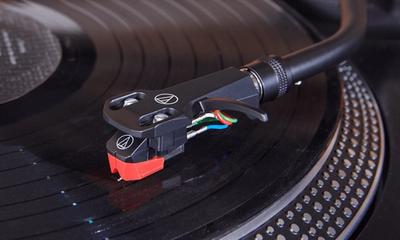
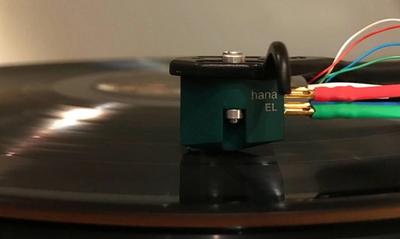
Vertical Tracking Angle is most often described, in casual use, as the angle of the tonearm relative to the record surface — arm parallel to the LP is "neutral," rear raised increases VTA, rear dropped decreases it. The technically precise definition, as AnalogMagik notes in its VTA tutorial, is the angle of the cantilever (not the armtube itself) relative to the flat record surface, measured as the line from the stylus contact point back to the cantilever's pivot inside the cartridge body.
Cartridge manufacturers publish VTA specs for their designs, and according to a Rega engineering summary hosted by Sonic Art, Rega measured more than 100 cartridge models and found actual VTAs ranging from 20 to 36 degrees, with most clustering between 23 and 28 degrees. That range matters because VTA is the lever the owner actually touches when raising or lowering the arm pillar.
SRA: The Stylus Angle That Actually Matters
Stylus Rake Angle is the angle formed between the vertical contact edge of the diamond tip and the record surface. As Audio Origami explains in its setup guide, VTA is about the mechanics of the "arm" (the cantilever), while SRA is about how the "blade" (the stylus) sits in the groove. SRA is the geometry that determines how faithfully the playback stylus mimics the cutting stylus that originally carved the lacquer.
The widely cited target is 92 degrees. The reason, as reviewers including Michael Fremer have argued in Stereophile and Analog Planet, is that master lacquers are cut with the cutter head tilted forward by roughly 1 to 5 degrees to allow the vacuum system to clear the lacquer "chip" from the groove. A playback stylus angled to match that cutting geometry traces the modulations the way the mastering engineer intended.
Why They're Related But Not the Same
Because the stylus is bonded to the cantilever at a fixed angle inside the cartridge body, and the cartridge is bolted to the headshell at a fixed angle, any change in VTA produces a proportional change in SRA. Raise the arm pillar and both angles rise together; lower it and both fall. In that sense the two are mechanically linked, and many hobbyists use "VTA" as shorthand for the adjustment that ultimately controls SRA.
But they are not the same angle and do not have the same optimal value. VTA sits in the 20-to-30-degree range depending on cartridge design; SRA sits near 92 degrees. When setup guides say "set VTA to parallel," they are using the tonearm as a convenient proxy because most owners cannot directly measure a 92-degree stylus angle without a USB microscope.
What Happens When VTA Is Off
Too High: Bright, Analytical, Fatiguing
When the rear of the tonearm sits too high, the stylus leans forward into the groove — rake angle increases past the 92-degree target. Reviewers consistently describe the result as a tipped-up presentation: accentuated treble, emphasized sibilance, a thinner bass line, and a sound Crutchfield characterizes as edgy and overly bright, sometimes crossing into sterile or harsh. Stack Audio describes the same phenomenon as the stylus raking forward and pulling hard on high frequencies.
The effect is not purely tonal. A cantilever held at too steep an angle is loaded in a direction its suspension was not engineered to handle, which can accelerate wear on both the stylus and the record surface. That makes "too high" more than an aesthetic complaint — sustained use at a badly elevated VTA is measurably harder on the cartridge.
Too Low: Warm, Sluggish, Rolled-Off
A tonearm sitting too low at the rear tips the stylus backward, dropping SRA below 92 degrees. The consensus report from tonearm setup references is a softer, warmer, bass-heavy sound with reduced treble detail and a loss of leading-edge attack. TNT-Audio's VTA method guide frames it bluntly: too-low VTA produces muddy bass, and the plucked notes of an acoustic bass lose their precision and sharpness.
A thread analyzed on What's Best Forum describes the timing consequence: when SRA is too low, the fundamental and harmonics of a note become slightly separated in time, stretching the note and making it sound unnatural. Too high, and the harmonics overlap the fundamental, softening transients. In both directions, the error is audible as a change in how notes start, sustain, and decay.
Why Small Changes Have Big Consequences
The geometry behind VTA adjustment is surprisingly unforgiving. On a standard 9-inch tonearm, Audio Origami's math shows that moving the pivot height by roughly 4 to 5 millimeters changes the angle by only one degree. That sounds like a wide tolerance — until you remember that the entire useful SRA window is a few degrees wide and centered on a target near 92.
Stylus profile determines how much that matters. Spherical and basic elliptical tips are forgiving because the contact patch is small and relatively symmetric. Line-contact, Shibata, and MicroRidge profiles are unforgiving: their narrow vertical contact "fins" must align precisely with the groove modulations, and a misaligned SRA shows up quickly as inner-groove distortion and a loss of high-frequency information.
How to Set VTA
The Starting Point: Parallel to the Record
The universal baseline, endorsed by essentially every setup reference, is arm-parallel-to-record with the stylus resting in a groove at the correct tracking force. Le Son's step-by-step guide describes this as the correct VTA for most cartridges, and for anything short of a line-contact stylus, it's often the entire adjustment. A bubble level or a simple ruler measuring from the record surface to the top of the armtube at two points is enough to get within a degree of the target.
Parallel is a starting point, not necessarily the destination. Reviewers consistently note that cartridges with advanced stylus profiles benefit from fine-tuning above or below parallel to land on the 92-degree SRA sweet spot.
Adjusting by Ear vs by Measurement
Two approaches dominate the community. The measurement camp, associated most visibly with Michael Fremer, uses a digital USB microscope to photograph the stylus in contact with a record and measure SRA directly, adjusting the arm until the angle reads close to 92 degrees. Stereophile coverage of the technique notes that Fremer and other analog specialists argue the 92-degree target should be reached even if it means applying a VTA that looks far from parallel on the armtube.
The by-ear camp uses a familiar acoustic reference — often a well-recorded acoustic bass or piano — and makes small incremental changes, listening for bass articulation, treble smoothness, and the "lock-in" moment when timing and tonal balance both snap into place. Both approaches converge on the same geometric target; they differ only in whether the feedback loop is visual or auditory.
Fixed vs Adjustable Tonearms
Not every tonearm exposes a VTA adjustment. Rega famously does not, and Rega's own engineering position is that a rigid, non-adjustable arm pillar is acoustically superior to one with a moving joint, because that joint is the mechanical reference point for the entire arm assembly. Rega owners who need to change height use aftermarket spacers in fixed increments — typically 2, 4, 6, or 8 millimeters.
At the opposite end, tonearms from VPI, Kuzma, SME, and high-end Clearaudio and Acoustic Signature models offer micrometer-style VTA towers, and some allow on-the-fly adjustment while a record is playing. The tradeoff — rigidity versus adjustability — is a genuine engineering choice, not a marketing one, and both philosophies have strong advocates among reviewers.
Common Misconceptions About VTA
"VTA and SRA are the same thing"
They are mechanically linked but geometrically distinct. VTA describes the cantilever's angle relative to the record and typically sits between 20 and 30 degrees; SRA describes the stylus contact edge's angle relative to the record and targets around 92 degrees. Using the terms interchangeably is convenient shorthand, but it obscures the fact that SRA is what the groove actually experiences and what determines playback fidelity.
"You need to adjust VTA for every record thickness"
The math says otherwise. A 180-gram LP is perhaps 0.3 to 0.5 millimeters thicker than a 140-gram pressing, which translates to roughly a tenth of a degree of SRA change — well below the audible threshold for most cartridges and stylus profiles. Making Vinyl's analysis notes that thicker records do shift VTA slightly, but whether that shift is audible depends entirely on how sensitive the specific setup is. For most systems, re-adjusting VTA per record is a ritual, not a requirement.
"A higher VTA always sounds better"
This myth traces back to a generation of setup advice that recommended raising the arm a few millimeters above parallel. The reality is direction-dependent: some cartridges are designed for optimal SRA at arm-parallel, some land closer to 92 degrees with the arm slightly raised, and a few want the opposite. "Higher is better" is a starting heuristic at best, and as Stack Audio's guide warns, an over-raised tonearm produces brightness, edge, and accelerated stylus wear.
FAQ
Does every tonearm allow VTA adjustment?
No. Rega's entire RB tonearm family ships without a VTA adjuster by design, on the engineering argument that a rigid, non-adjustable arm pillar improves mechanical behavior. Linn's Ekos, Akito, and Ittok arms similarly require loosening a collar at the base rather than offering a dedicated adjuster. Adjustable VTA towers are common on VPI, SME, Kuzma, and higher-end Clearaudio and Acoustic Signature models, and some allow adjustment while the record is playing. Owners of fixed-VTA arms typically use spacers to change height in discrete increments.
How does VTA interact with tracking force?
Changing VTA shifts the effective mass distribution of the arm slightly, which can nudge measured tracking force, and Ortofon's technical guidance on tracking and stylus geometry confirms that geometry and downforce are interdependent. Best practice, echoed across setup guides, is to re-check tracking force after any meaningful VTA change and to re-confirm azimuth at the same time, since tonearm-height changes can also introduce small lateral tilts. The three parameters — VTA, tracking force, and azimuth — are not independent, and a change to one often requires verification of the others.
Can I damage my records with wrong VTA?
Extreme misadjustment can. When SRA is badly off, the stylus contacts the groove wall asymmetrically, increasing stress on one edge of the diamond and on the corresponding groove wall. Over hundreds of plays, that asymmetry accelerates wear on both surfaces. A tonearm raised or lowered by a few millimeters from optimal is unlikely to do meaningful harm to modern pressings, but a severely tipped-up or tipped-down arm paired with high tracking force is a genuine risk — particularly for line-contact stylus profiles, which concentrate force over a very small contact area.
How to Level a Turntable
Best Turntables Under $1,000
Best Cartridge Upgrades Under $300
How to Set Up Your Turntable: A Step-by-Step Guide
Put this into practice
Ready to apply what you just learned? These guides will help you make a smarter buying decision.